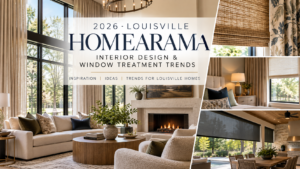
Louisville’s HOMEARAMA Trends (Interior Design & Window Treatment Trends) has long been one of the region’s best places to see where residential architecture and interior design are headed next.
Presented by the Building Industry Association of Greater Louisville, the 2026 HOMEARAMA took a scattered-site approach, featuring 18 homes throughout the Greater Louisville region over three weekends in September. Rather than focusing on a single development or one definition of luxury, this year’s event showcased a wider range of homes, neighborhoods, architectural styles and approaches to modern Kentucky living.
And while Indigo Blinds & Shades was not involved in this year’s HOMEARAMA, many of the design directions represented throughout the 2026 homes reinforce trends we have been following and seeing in our own projects throughout Louisville, Lexington and the surrounding region.
The biggest takeaway?
The overly cool, stark and minimalist home is giving way to something warmer, more personal and considerably more layered.
That shift has important implications for everything from flooring and cabinetry to furniture, lighting—and, of course, window fashions.
1. Warmth Is Replacing the All-White Interior
One of the clearest movements in 2026 interior design is the continued departure from the sterile white-and-gray palette that dominated residential design for years.
Warm wood tones, natural textures, richer finishes and more individualized color palettes are bringing character back into the home.
That direction was visible throughout the design language of this year’s HOMEARAMA homes.
The Camberly by Bailey Homes in Norton Commons, with interior design by Christy Maser Designs, was described around warm architectural details and refined but comfortable interiors.
Cross Valley Homes’ Ember, meanwhile, paired contemporary design with natural textures in what was described as a “Transitional Kentucky” style—an interesting reflection of how modern Kentucky interiors are evolving.
Other homes leaned into classic European influences, coastal-inspired neutrals, architectural millwork, natural stone, hardwood and cabinetry that gives rooms depth rather than relying on stark contrast.
The result is luxury that feels less like a showroom and more like a thoughtfully collected home.
2. Personality Is Back
Perhaps the most exciting interior design trend of 2026 is that homes are becoming individual again.
Homeowners and designers are increasingly willing to use color, texture, architectural detailing, artwork and unexpected materials to give a room identity.
That doesn’t necessarily mean every space needs to be bold.
Instead, it means moving away from designing every home around the same neutral formula.
We explored this same shift earlier this year in our article on 2026 Interior Design Trends: Why Rich Fabrics & Custom Drapery Are Making a Major Comeback.
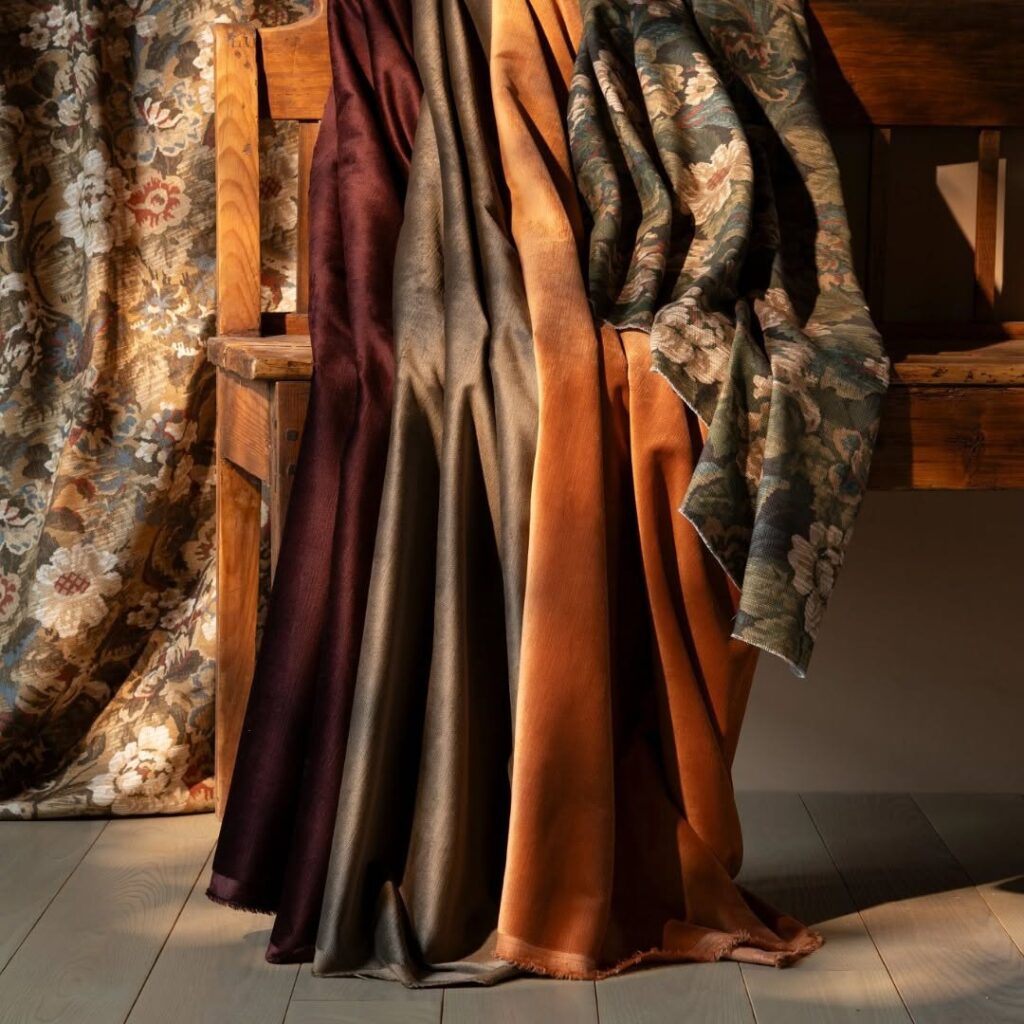
Velvet, linen, woven materials, florals, warmer earth tones, decorative trim and layered textiles are giving designers another way to introduce personality without sacrificing sophistication.
Window treatments naturally fit into this movement.
A woven natural shade can introduce organic texture. A tailored Roman shade can bring pattern into a room. Drapery can soften architecture and introduce color. Even a clean roller shade can be selected in a warmer textile rather than simply disappearing into the wall.
The window is becoming part of the design and not something addressed after everything else is finished.
3. Natural Materials Continue to Define Modern Luxury
Wood, stone, woven materials and tactile surfaces continue to play an important role in luxury residential design.
The appeal is easy to understand.
Natural materials add visual variation and warmth that perfectly uniform surfaces often cannot provide. They also work equally well in contemporary, transitional and traditional interiors.
For window fashions, this makes natural woven shades and textured Roman shades especially relevant.
Woven materials can complement hardwood floors, stone fireplaces, natural cabinetry and other organic finishes without competing with them.
They can also be layered with drapery when a room requires additional privacy, room darkening or softness.
This is one reason natural shades have become such an important part of the current window-treatment conversation: they bridge architecture and interior design beautifully.
4. Large Windows Are Becoming Architectural Features
Another recurring feature among the 2026 HOMEARAMA homes is the emphasis on natural light.
Bluegrass Charm by Key Homes uses expansive windows and soaring openings to create bright living spaces. The Brighton similarly emphasizes expansive rear windows and a strong visual connection between the main living area and covered outdoor space.
This approach creates beautiful interiors—but it also changes the conversation around window treatments.
When a window is intentionally designed to frame a view, covering it with a heavy or visually distracting treatment defeats the purpose.
The better question becomes:
How do we manage light, glare, heat and privacy without losing the architecture or the view?
That is where products such as solar shades, roller shades, motorized shades and carefully selected natural shades become particularly effective.
Solar shades can reduce glare and UV exposure while preserving the connection outdoors. Roller shades provide a minimal architectural profile. Motorization allows large or difficult-to-reach shades to disappear when they aren’t needed and lower when sunlight or privacy becomes an issue.
For dramatic windows, simplicity can sometimes be the most luxurious solution.
5. Layered Window Treatments Complete the Designer Look
At the opposite end of the spectrum, 2026 is also seeing a renewed appreciation for beautifully layered windows.
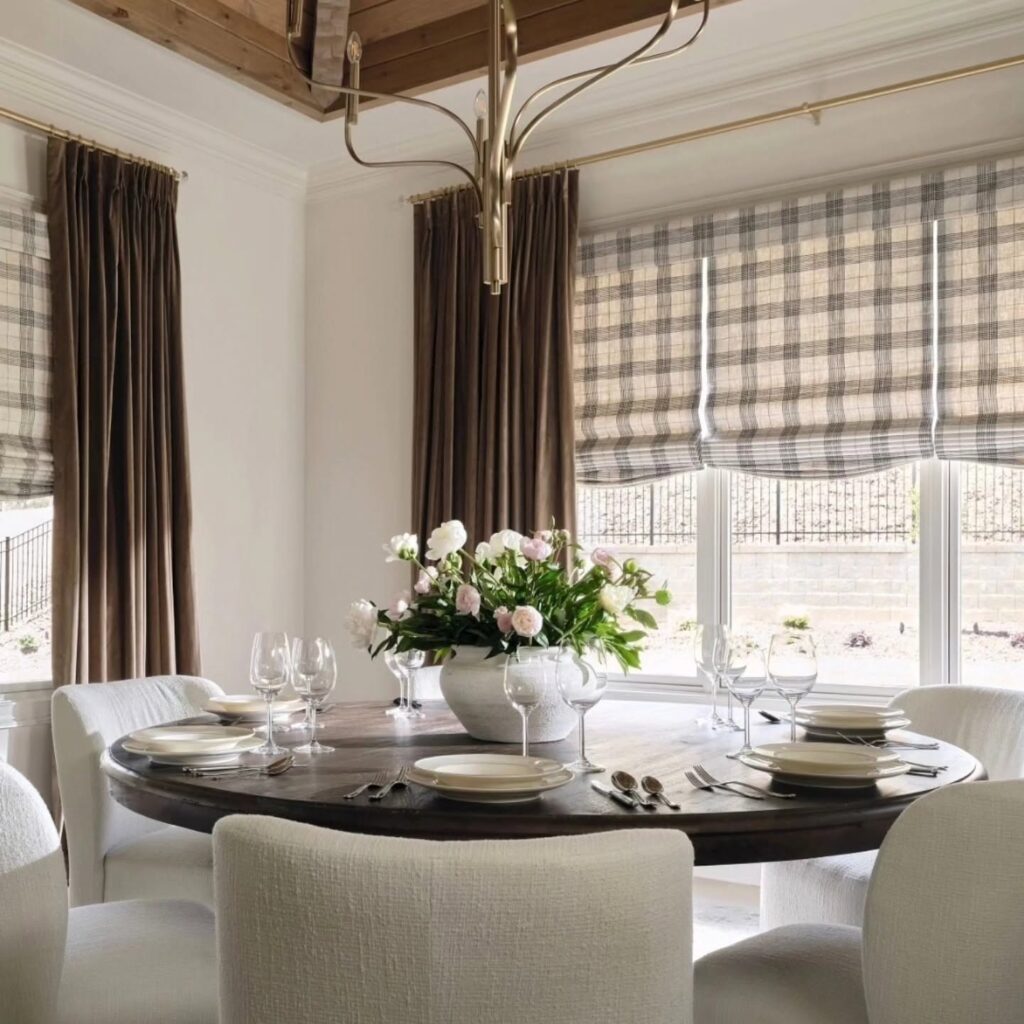
A functional shade handles privacy and light control while drapery adds softness, scale, texture and movement.
Some of our favorite combinations include:
- Natural woven shades with custom drapery
- Roller or solar shades with decorative side panels
- Roman shades with full-length drapery
- Cellular shades layered beneath fabric panels
- Motorized shades paired with custom drapery
Layering becomes especially effective in rooms with tall ceilings and larger windows because fabric helps visually connect the window to the architecture around it.
Taking drapery higher, and in the right setting nearly to the ceiling, can emphasize height and make a room feel more complete.
The goal isn’t necessarily to add more.
It is to make every layer purposeful.
6. Indoor-Outdoor Living Continues to Grow
Some of the most interesting features at the 2026 HOMEARAMA weren’t limited to the interiors.
Outdoor living continues to become an extension of the home itself.
Bluegrass Charm features a covered rear porch with motorized retractable screens opening toward the pool. The Nest by Stonelake Homes similarly incorporates automatic power screens, infrared heating and a covered porch designed to extend the usable outdoor season.
Across several homes, covered patios, decks, pools, grilling areas and outdoor entertaining spaces were treated as true living areas rather than secondary backyard features.
For Kentucky homeowners, that trend makes considerable sense.
Retractable screens, exterior solar shades and retractable awnings can make these spaces more comfortable through changing sun conditions while helping extend how, and when, outdoor spaces are used.
The line between window fashions and outdoor shading is becoming increasingly blurred as homeowners look at the entire home as one connected environment. Ultimate Guide to SunSetter Outdoor Living Spaces by Indigo Blinds & Shades
7. Motorization Is Becoming Part of Good Design
Technology in the home is also becoming quieter.
Instead of technology being something homeowners necessarily want to see, the best smart-home features increasingly work in the background.
Window treatments are a perfect example.
Motorization can be particularly valuable for:
- Tall windows
- Large expanses of glass
- Hard-to-reach windows
- Bedrooms requiring room darkening
- Solar shades used for afternoon glare
- Homes incorporating smart-home automation
- Multiple shades that need to operate together
A homeowner can schedule shades around changing sunlight rather than manually adjusting them throughout the day.
The visual result is cleaner, too particularly when motorization eliminates the need for visible operating cords and allows several shades to align consistently.
For new construction, we increasingly believe conversations about motorized window treatments should happen during the design and electrical planning stages, not after the home is completed.
8. HOMEARAMA Trends and the Norton Children’s Hospital Raffle Home Tell a Similar Design Story
One of the most interesting aspects of reviewing the 2026 HOMEARAMA trends is how closely they align with another important Louisville home project this year: the 2026 Norton Children’s Hospital Raffle Home in Norton Commons.
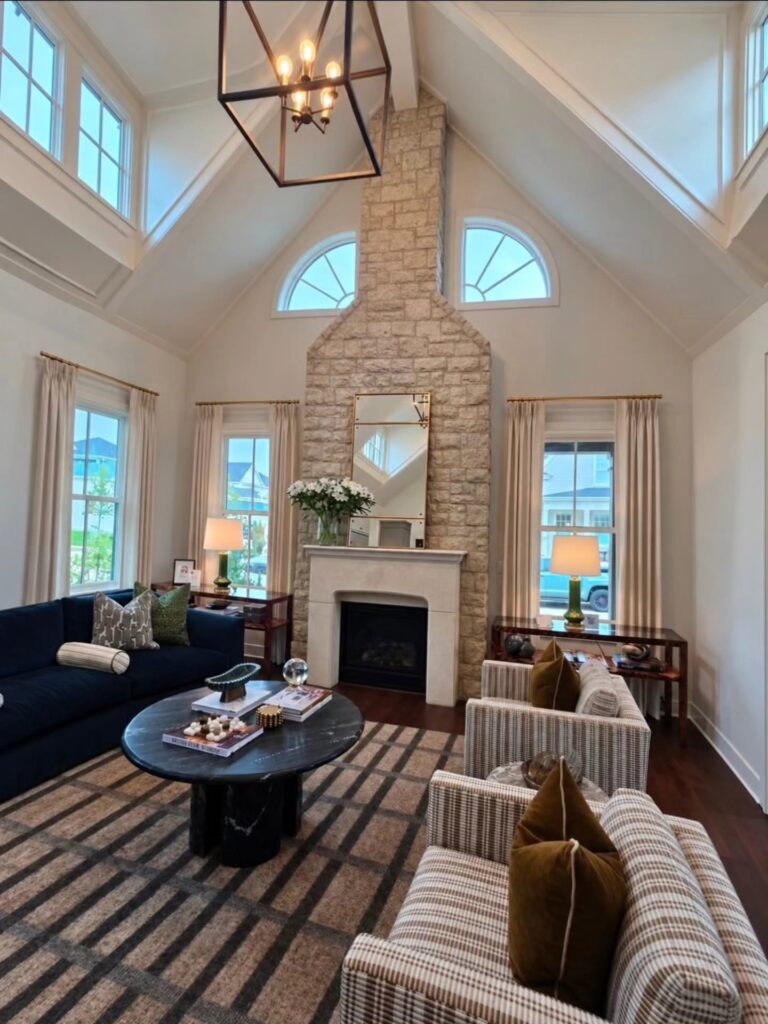
Built by Ramage Company with interior design by Clare Miller Home, the Raffle Home takes the movement toward personality even further.
Bold color, natural materials, layered textiles, statement ceilings, artwork and thoughtfully selected details create a home that feels curated rather than formulaic.
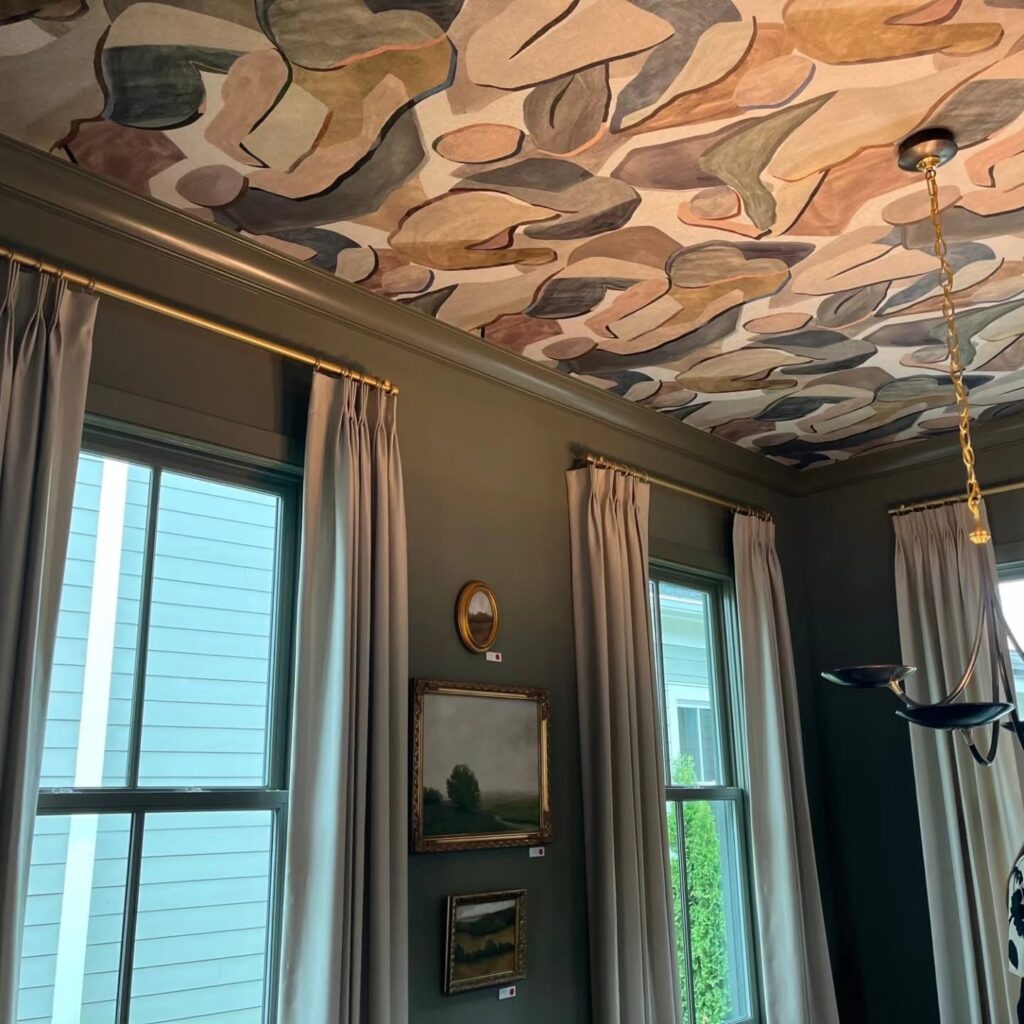
For this project, Indigo Blinds & Shades worked alongside the design and building teams to provide custom window fashions with our manufacturing partner, Graber.
The selections included natural textures, shades, and drapery that were chosen to complement the architecture and Clare Miller Home’s overall interior design vision rather than compete with it.
For us, that project demonstrates one of the most important lessons coming out of 2026 design:
Window treatments work best when they are considered part of the interior design from the beginning.
Fabric, texture, privacy, natural light, room darkening, motorization and how a treatment relates to surrounding architecture should all be considered together.
9. What Does This Mean for Louisville Homeowners?
Trends are useful for inspiration, but a custom home should never feel as though it was designed around a checklist of trends.
If anything, the 2026 Louisville HOMEARAMA Trends point in the opposite direction.
The most compelling homes are becoming more personal.
For one homeowner, that might mean a dramatic patterned Roman shade.
For another, it could be an understated woven natural shade.
A contemporary home with expansive glass might call for nearly invisible motorized solar shades, while a traditional Louisville home may feel more complete with shutters or tailored drapery.
Good window design starts with the architecture, the room and how the homeowner actually lives.
The Window Fashion Trends We’re Watching Beyond 2026
Looking across the direction of Louisville residential design this year, we expect several window-fashion trends to remain important:
Natural texture. Woven materials and tactile fabrics will continue to complement warmer interiors.
Layering. Shades paired with drapery provide both functionality and a more finished designer appearance.
Motorization. Particularly for new construction, large windows and smart homes, automation will increasingly become part of the initial design conversation.
Better light management. Homeowners want natural light — but they also want control over glare, UV exposure, heat and privacy.
More individuality. Color, pattern and texture are giving homeowners permission to make window treatments part of a room’s personality.
Indoor-outdoor integration. Exterior shades, retractable screens and retractable awnings will continue to become part of the broader conversation about whole-home design.
Louisville Design Is Becoming Warmer, Smarter and More Personal
HOMEARAMA Trends has always provided a snapshot of what builders, designers and homeowners are thinking about next.
The 2026 edition reinforces a direction we have been watching throughout the year: luxury is becoming less about making a home look perfect and more about making it feel personal.
Warmth matters.
Texture matters.
Natural light matters.
Technology matters: but it should make the home easier to live in rather than overwhelm it.
And the finishing details matter.
At Indigo Blinds & Shades, that’s where we see window fashions playing an increasingly important role. From natural woven shades and custom drapery to shutters, solar shades and fully motorized solutions, the right treatment can connect architecture, interior design and everyday functionality in a way few other finishing elements can.
Indigo Blinds & Shades provides custom window treatments throughout Louisville, Lexington and surrounding Kentucky and Southern Indiana communities. Our team offers complimentary in-home consultations with custom measuring, design guidance and professional installation.
Explore more 2026 design inspiration:
Read 2026 Interior Design Trends: Why Rich Fabrics & Custom Drapery Are Making a Major Comeback and take a closer look inside the 2026 Norton Children’s Hospital Raffle Home to see how these trends are taking shape in Louisville homes.