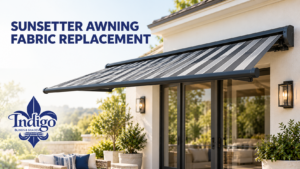
A practical SunSetter Awning Care Guide for protecting your outdoor shade investment
Start Here
A retractable awning is designed to give you shade when you want it and to retract when conditions are not suitable. The most important care habit is simple: keep the fabric clean and dry, retract before wind or heavy weather, and address small changes before they become repairs.
SunSetter Awning Care Guide five rules that matter most
- Retract the awning before strong winds, heavy rain, snow, freezing conditions or whenever the home will be unattended.
- Never allow rainwater to pool on the fabric. If water begins to collect, stop using the awning and follow the model-specific draining instructions in the owner’s manual.
- If the awning must be retracted while wet, reopen it as soon as weather permits and let it dry completely.
- Keep grills, patio heaters, fire pits and fireplaces away from and never directly beneath the awning.
- Use only model-compatible SunSetter accessories and approved repair procedures. Do not disassemble spring-loaded arms or motor components.
SunSetter Awning Care Guide Quick care schedule
| When | What to do |
| Each use | Check the weather, clear the travel path, watch the awning during operation and retract it when finished if conditions may change. |
| Monthly in season | Brush off dry debris; inspect fabric, seams, valance, arms, brackets, power cord and sensor housings. |
| Spring opening | Wash as needed, test remote and accessories, inspect fasteners and verify smooth operation. |
| Before winter | Clean and dry completely, retract fully, protect exposed fabric where the model permits and store removable accessories. |
| After a storm | Do not operate until you have checked for loose hardware, bent components, torn fabric, pooling or electrical damage. |
Important: This guide supplements — not replaces — the owner’s manual, installation instructions and warranty for your exact model and production year.
Safe Everyday Operation
Before opening
- Confirm that people, pets, doors, furniture and hanging objects are clear of the awning’s travel path.
- Look for wind, rain, ice or snow. Forecasts can change quickly; retract early rather than waiting for severe conditions.
- Check that the fabric will unroll cleanly and that nothing is resting on the cassette, hood, front bar or arms.
- For motorized models, use a grounded GFCI outlet with an in-use weatherproof cover and maintain the recommended drip loop in the power cord.
While operating
- Keep the awning in view while it opens or closes. Stop if movement is uneven, obstructed or accompanied by unusual grinding, binding or repeated clicking.
- Do not repeatedly cycle the motor. A thermal protector may temporarily stop the motor after several consecutive operations; allow it to cool.
- Do not extend past the programmed open limit or to a point where fabric becomes slack or wraps incorrectly around the roller bar.
- Never hang decorations, plants, tools or other weight from the front bar or arms unless the item is a manufacturer-approved accessory installed as directed.
Weather decisions (SunSetter Awning Care Guide)
| Condition | Best practice |
| Light sun or calm conditions | Open to the amount of shade desired; partial extension is acceptable when permitted by your model. |
| Light rain | Retract if water does not run off immediately or if pooling begins. Retractable awnings are primarily sunshade products. |
| Wind or gusts | Retract promptly. Do not use a sensor rating as a promise that conditions are safe. |
| Heavy rain, storms, hail or snow | Keep fully retracted. Remove accumulated snow or ice only using safe, model-appropriate methods. |
| Leaving home or going to bed | Retract fully, even when automated sensors are installed. |
Sensors are backups, not supervision. Wireless wind and rain sensors depend on correct installation, power, batteries, settings, signal and response time.
Cleaning the Fabric
Clean on a mild, dry day so the fabric can remain extended until completely dry. Always identify your fabric type before treating stains. If you are unsure, contact Indigo with the awning model, approximate installation date and a photo of the fabric label or pattern.
Routine cleaning for all fabrics
- Fully extend the awning in calm conditions and remove loose dirt while the fabric is dry using a soft brush or gentle vacuuming.
- Rinse or wet the surface with lukewarm water. Avoid high-pressure washing, which can damage finishes, seams and coatings.
- Apply a mild soap solution with a soft-bristle brush. Work gently from the lower edge upward to reduce streaking.
- Rinse thoroughly until no soap remains. Clean the valance at the same time, supporting it rather than pulling on it.
- Leave the awning fully extended until the top, underside, seams and valance are completely dry.
Care by fabric family
| Fabric | Recommended care | Avoid |
| Laminated fabric | Mild soap, lukewarm water and a soft brush. Rinse completely and air-dry before retracting. | Caustic cleaners, abrasive tools, pressure washing, solvents and bleach unless your exact manual expressly allows it. |
| SunSetter Performance Acrylic or woven acrylic | First brush or vacuum dry debris, then use prolonged lukewarm-water rinsing with mild soap and gentle brushing. Rinse thoroughly. | Aggressive scrubbing, heat, pressure washing and unapproved stain chemicals. |
| Sunbrella performance fabric | Follow the Sunbrella care label and current fabric-specific instructions. Mild soap and water handle most routine soil. | Mixing products, skipping a thorough rinse, or applying a treatment without checking the care instructions. |
Do not combine bleach with ammonia, acids, vinegar or other cleaners. For stubborn mildew or staining on acrylic fabric, obtain fabric-specific instructions before using a diluted bleach solution. Rinse exceptionally well.
Spot and stain response
- Leaves, dust or pollen: let dry, brush away, then wash routinely.
- Bird droppings: remove solids gently, soak with mild soap solution and rinse well.
- Tree sap or oily residue: do not use household solvents; ask Indigo for fabric-specific guidance.
- Mildew appearance: clean the dirt supporting the growth, dry completely and escalate persistent staining.
For a puncture or tear, retract if safe, photograph the damage and avoid widening it. Use only an approved repair kit or service procedure.
Frame Motor and Controls
Frame and hardware
- Wipe powder-coated aluminum with clean water and mild soap; dry with a soft cloth. Touch up scratches only with a compatible finish.
- Look for loose fasteners, movement at mounting brackets, uneven arm extension, damaged end caps and changes in pitch.
- Do not tighten structural fasteners, alter pitch or work on lateral arms unless you have the correct model procedure and experience. Lateral arms are spring-loaded.
- A light lubricant may be appropriate once a year at only the points named in the owner’s manual, such as the roller-bar bushing opposite the motor or gear and certain arm pivots. Wipe away excess; do not spray fabric, motor, brakes or electrical parts.
Motorized awnings
- Keep the outlet, plug and cord in good condition. If a GFCI trips repeatedly, unplug the awning and arrange service.
- Replace remote batteries when range becomes unreliable. Match polarity and battery type shown in the remote instructions.
- Do not change motor limits casually. Incorrect limits can loosen fabric or over-drive the front bar.
- During a power outage, use the manual override only if your model has one and follow its instructions. Never force the crank.
Smart controls and sensors
| Accessory | Owner check |
| Wireless wind sensor | Confirm secure mounting, fresh batteries where applicable, correct pairing and a successful test at the start of the season. |
| Wireless rain sensor | Keep the sensing surface clean and verify pairing. Retract manually when rain or storms are expected. |
| TaHoma smart control | Keep the hub online, app updated and scenes reviewed after router, password or power changes. |
| Wireless wall switch or remote | Keep dry, label channels, replace batteries as needed and avoid accidental commands while servicing nearby. |
| LED or patio lights | Inspect clips and wiring before use; switch off and arrange service if lights flicker, overheat or show damaged wiring. |
Seasonal Care in Kentucky and Southern Indiana
Local seasons bring pollen, humidity, thunderstorms, freeze-thaw cycles and long periods when the awning may stay retracted. A short seasonal routine keeps the fabric cleaner and helps reveal service needs early.
Spring
- Inspect mounting points, frame, fabric and electrical components before the first full extension.
- Brush away winter debris and wash only if needed.
- Test the remote, wall switch, lights, wind sensor, rain sensor and smart-home controls.
- Confirm the awning opens evenly and stops at the normal positions.
Summer
- Brush off pollen and debris before it becomes embedded.
- Retract before pop-up thunderstorms and whenever the property is unattended.
- Keep grills and heat sources away from the shade area.
- Allow wet fabric to dry promptly after unexpected rain.
Fall
- Remove leaves, seed pods and organic debris from fabric, hood and cassette areas.
- Complete a final gentle cleaning early enough for thorough drying.
- Check whether faded, torn or dated fabric should be measured for winter replacement.
- Review accessory upgrades while lead times are typically easier to plan than in peak spring demand.
Winter
- Retract fully and keep the unit closed during snow, ice and freezing weather.
- Install or secure the model-compatible hood, cover or cassette protection if applicable.
- Remove and store detachable panels, lights or other seasonal accessories as their instructions require.
- Do not operate a frozen awning. Wait for safe thawing and inspect before use.
After severe weather
- From the ground, check for shifted brackets, bent arms, torn fabric, unusual sagging or loose wiring.
- Do not stand beneath or operate a visibly damaged awning.
- Take clear photos from several angles and note what happened.
- Contact Indigo before attempting adjustments or disassembly.
SunSetter Accessories
Accessory availability depends on awning model, width, mount type and production year. Some features are factory-integrated and cannot be added later in the same way as field-installed accessories. Indigo will verify compatibility before ordering.
| Accessory | What it adds | Care note |
| Integrated or dimming LED lights | Adjustable evening illumination along the awning arms. | Keep wiring and clips secure; do not direct water at electrical connections. |
| Patio lights | Ambient lighting suspended beneath compatible models. | Remove or secure as instructed before retracting or during severe weather. |
| Wireless wind sensor | Automatic retraction response when sensed movement reaches the configured threshold. | Test seasonally; never rely on it while away. |
| Wireless rain sensor | Automatic response when the sensor detects rain. | Keep the sensing area clean; manually retract ahead of storms. |
| Wireless wall switch | Convenient fixed-location control. | Keep dry and verify channel assignments. |
| Somfy TaHoma switch | App, scene and compatible smart-home control for motorized systems. | Internet and power interruptions can affect automation. |
| Weatherbreaker front panel | Added low-angle sun, glare and light-weather protection at the front edge. | Remove or roll as directed before retracting or in wind. |
| Weatherbreaker side panel | Side protection from low-angle sun and light breeze. | Store clean and dry; confirm left/right fit and model compatibility. |
| Awning cover | Seasonal protection for a retracted awning on compatible mounts. | Install only when fabric is dry; inspect ties and fit. |
| Aluminum hood | More permanent overhead protection for the retracted awning. | Wash gently and keep leaves from accumulating. |
| Cleaning and maintenance kit | Compatible cleaner, brush and selected maintenance/repair supplies. | Use each component only as labeled for your fabric and frame. |
| Awning fabric cleaner | Concentrated cleaner for routine fabric care. | Dilute and apply exactly as directed; rinse completely. |
| SunSetter mat | Finished outdoor surface beneath the shade area. | Clean and dry before storage; follow mat instructions. |
| Combo All-Weather Warranty | Optional protection beyond the standard limited warranty, subject to plan terms. | Review eligibility, exclusions, claim steps and term before purchase. |
Model Specific Additions
The current SunSetter range includes different accessory combinations. The list below helps clients ask the right questions; it is not a fitment promise.
PRO models and drop screens
PRO and PRO XL configurations may include a built-in front drop screen for low-angle sun, glare and privacy. Keep it clean, roll it evenly and retract it before operating the main awning unless the model instructions state otherwise. A built-in drop screen is a model feature, not the same product as a removable Weatherbreaker panel.
Platinum Plus semi-cassette models
The semi-cassette helps shield retracted fabric and creates a finished appearance. It reduces exposure but does not eliminate cleaning, inspection or the need to retract in unsuitable weather.
Oasis freestanding awnings
Oasis accessories can include compatible lighting, controls, sensors and a protective cover. Because the unit is freestanding, inspect base connections and site conditions in addition to the fabric, arms and electrical system.
Legacy 900XT and 1000XT accessories
| Accessory | Purpose |
| RainAway arches | Support a crown in the fabric to promote runoff in conditions permitted by the product instructions. |
| Center brace | Adds support on compatible XT installations. |
| DeFlappers | Help secure fabric edges on compatible XT models. |
| Screen room | Creates a more enclosed seasonal area beneath a compatible awning. |
| Deck plates or floor-mount kit | Model-specific mounting components for approved installations. |
| Protective vinyl cover | Off-season protection for the retracted unit. |
Complementary exterior shade products
EasyShade exterior shades and EasyScreen retractable screens are separate SunSetter products, not awning accessories. They can be coordinated with an awning to manage low sun, glare, insects and privacy. Their motors, guide systems, batteries, solar panels and fabrics have separate manuals and maintenance requirements.
Fabric Replacement and Renewal
A sound frame can often receive new fabric, giving the awning a refreshed look without replacing the complete system. Replacement is also an opportunity to update the color, pattern, valance style or performance fabric, subject to model compatibility.
Consider replacement when
- Color has faded beyond the look you want.
- Seams, hems or the valance show wear.
- Fabric remains stained after proper cleaning.
- There are tears, punctures, cracking or coating failure.
- You are updating the exterior palette or preparing the home for sale.
- The fabric no longer rolls evenly or holds appropriate tension after other causes have been ruled out.
What Indigo will need
| Information | Why it matters |
| Awning model and serial number | Confirms the correct replacement procedure and components. |
| Width and projection | Determines fabric dimensions and compatibility. |
| Mount type and approximate installation year | Helps identify generation-specific details. |
| Photos of the full awning, roller area, front bar and damage | Allows preliminary assessment before a visit. |
| Existing fabric name or pattern, if known | Helps match or intentionally change the appearance. |
| Accessory list | Ensures lights, drop screens, hoods or sensors are considered in the work plan. |
Professional replacement process
- Confirm model, dimensions, condition and compatibility.
- Select the new fabric and valance options.
- Order the correctly fabricated replacement.
- Safely remove and install the fabric using the exact model procedure.
- Reset or verify tension, limits and alignment as required.
- Operate, inspect and review care instructions with the client.
Fabric replacement involves tensioned components, elevated work and model-specific sequencing. Indigo recommends professional evaluation and installation rather than improvising from a generic video. Learn More Here
Troubleshooting Before You Call
| What you notice | Safe checks | Stop and request service when |
| Motor does not run | Confirm outlet power, GFCI status, remote battery and correct channel. Allow an overheated motor to cool. | Breaker or GFCI repeatedly trips, cord is damaged, motor hums without movement or reset steps are unclear. |
| Awning stops partway | Check for an obstruction and whether a sensor issued a command. Wait for motor cooling if recently cycled. | Movement is uneven, an arm appears bent or the front bar is not level. |
| Fabric sags | Confirm it is not overextended and no water is present. Retract if safe. | Pooling exists, roller alignment changed or sagging appeared suddenly. |
| Awning retracts unexpectedly | Check wind/rain conditions, sensor batteries, pairing, channel and automation scenes. | Repeated unexplained movement creates a safety concern. |
| Remote range is short | Replace the battery, move closer and check channel selection. | Reprogramming is needed and the correct procedure is not available. |
| Squeak during operation | Identify whether it comes from a manual-approved lubrication point. | There is grinding, popping, binding, metal contact or visible hardware movement. |
| Fabric rolls unevenly | Remove loose surface debris and observe from a safe distance. | Fabric tracks to one side, folds sharply, rubs hardware or a seam is failing. |
| Lights do not work | Confirm power, remote channel and visible connections without opening electrical housings. | Wiring is loose or damaged, lights flicker, smell hot or show water intrusion. |
Information to have ready
- Client name and installation address
- Model, serial number and approximate installation date
- A short description of when the issue began
- Weather conditions at the time
- Photos or a brief video from a safe position
- Any recent power, router, remote, sensor or accessory changes
- Have you referenced the SunSetter Awning Care Guide
Warranty Records and Service Planning
SunSetter warranty terms vary by product line, accessory, purchase date and optional coverage. Current SunSetter materials describe 5-year limited coverage for SunSetter Series models and accessories and 10-year limited coverage for Platinum Series models and accessories; the written warranty supplied with the purchase controls. Optional All-Weather coverage has separate terms, eligibility and exclusions.
Keep these records together
- Sales agreement and proof of purchase
- Model and serial number
- Final measurements and fabric selection
- Installation date and installer information
- Owner’s manual and warranty documents
- Accessory manuals and remote programming notes
- Cleaning dates, service visits and photos of any damage
- SunSetter Awning Care Guide
Client record
| Item | Details |
| Client and installation address | |
| Installation date and installer | |
| Awning model and serial number | |
| Width projection and mount type | |
| Fabric and color | |
| Accessories | |
| Standard and optional coverage | |
| Next recommended inspection |
Service log
| Date | Cleaning inspection or service | Completed by |
A More Comfortable Outdoor Space
The best awning is one that fits the home, the way the patio is used and the level of convenience the client wants. Indigo can help existing owners maintain and update a SunSetter system—and help new clients compare awning models, fabrics, controls and accessories in the setting where they will actually be used.
Ask Indigo about
- Fabric replacement
- Integrated or dimming LED lighting
- Wind and Rain sensors
- Somfy TaHoma smart-home control
- Weatherbreaker front and side panels
- Hoods, covers and seasonal protection
- EasyShade exterior solar shades and EasyScreen retractable screens
- New SunSetter awnings, including motorized, Platinum, Platinum Plus, PRO, XL, Beyond and Oasis options where available
Plan before peak season
Fall and winter are excellent times to evaluate fabric, order upgrades and plan spring-ready outdoor shade. Clients often have more flexibility for consultation, fabric selection and installation before the first stretch of warm weather. Learn More Here
| SunSetter Awning Care Guide Schedule a Consultation indigoblindsandshades.com/free-consultation/ Serving Louisville, Lexington and surrounding areas. |
Official Resources and Important Notes
This SunSetter Awning Care Guide was prepared as an easy-to-use client resource. Product offerings and instructions can change. Always use the manual and warranty issued for the exact awning model and production year.
Official SunSetter resources
Owner support, manuals and replacement procedures
https://support.sunsetter.com/
Current awning accessories
https://www.sunsetter.com/cm/awning-accessories
Retractable awning frequently asked questions
https://www.sunsetter.com/cm/faqs/
Warranty information
https://www.sunsetter.com/cm/warranty/
Fabric and color information
https://www.sunsetter.com/cm/fabrics-and-colors/
SunSetter care and maintenance article
https://www.sunsetter.com/cm/sunsetter-blog/the-importance-of-awning-maintenance/
SunSetter fabric replacement overview
https://www.indigoblindsandshades.com/sunsetter-awning-fabric-replacement/
Scope and safety
Indigo Blinds & Shades is an independent authorized SunSetter dealer. SunSetter, Somfy, TaHoma, Sunbrella and associated product names are trademarks of their respective owners. Product names are used for identification and client education. Accessory fit, warranty coverage and service recommendations must be confirmed for the specific product. This SunSetter Awning Care Guide does not authorize structural, electrical, motor, spring-arm or elevated repairs by an unqualified person.
SunSetter Awning Care Guide Updated September 2026. Review product availability and instructions before future reprints.